In Profile: Designer Alicia Cheung
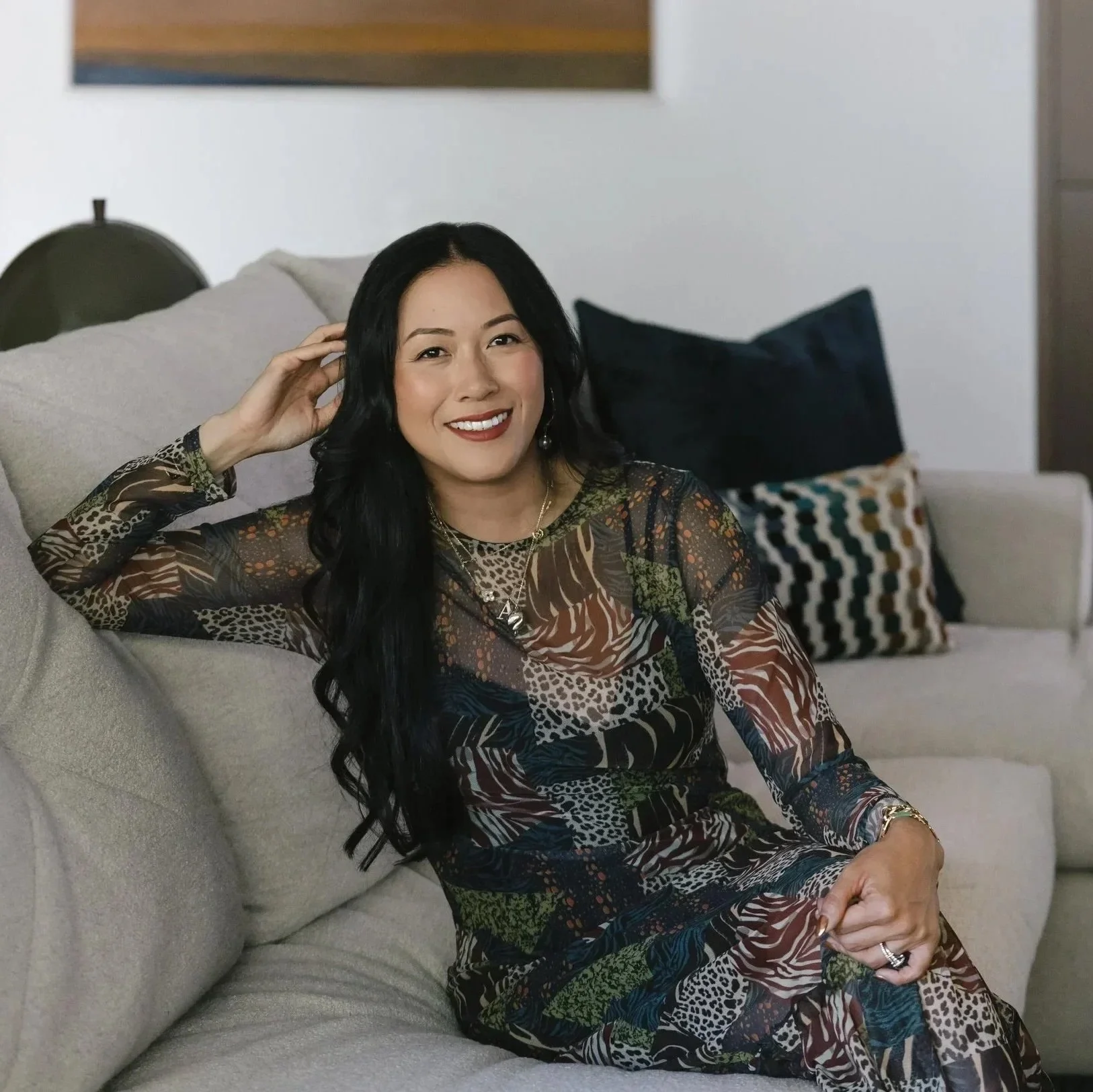
Image: Alicia Cheung; Photographer, Shot by Salt
For our inaugural profile, we chose Alicia Cheung, founder and principal of Alicia Cheung Design (ACD). Before launching her own firm in 2024, the Silicon Valley native honed her craft working for the brilliant designer Ken Fulk and later co-founded Studio Heimat with fellow Fulk alum Eva Bradley. Alicia combines her wealth of experience with a collaborative attitude, coordinating seamlessly with architects, builders, and artisans to bring each client’s vision to life. Beyond her design practice, she is a founding member of the AAPI Design Alliance, an organization dedicated to elevating, connecting, and empowering Asian Americans and Pacific Islanders interior design professionals.
BC: You grew up in San Jose. What was it like experiencing the transformation of the former Valley of the Heart’s Delight into today’s Silicon Valley? How did those changes shape your perspective on design and community?
AC: There was this strange layering, the old agricultural valley still visible beneath the new tech-fueled one, and I think that taught me very early that places hold memory even as they change. So many housing developments, empty lots turned into shopping centers. As teens, my friends and I would sneak into the housing development next to our neighborhood, remove their painted markers, and take down signs. I guess we didn’t like watching the deer and prairie dogs’ homes being destroyed. Thinking back on it now, we were definitely part of the problem (my parents both worked in tech, and wanted to be near good schools), but many things can be true at once.
Nothing stays the same, but the best transformations honor what came before instead of erasing it. That is very much how I think about a home. I am never just decorating a blank box. I am always asking what was here, what this family carries with them, and how we let the new chapter feel like it belongs next to the old one. Growing up in a place that was constantly reinventing itself also gave me a real comfort with change and risk, which has served me well running my own firm.
BC: How did your Malaysian mother and Cantonese father influence your sense of aesthetics, culture, and home?
AC: My parents come from two very different worlds, and both are very different from how I grew up. My mother brought Malaysian warmth, color, pattern, and the knowledge that being in service to others is the ultimate way to show love. She’s one of those women who is effortlessly elegant, in the way she dresses and how she carries herself.
My father grew up with 6 siblings, and all migrated to San Francisco in the early 80s. Hard work, family, and luck all played a big part in my family’s story. My dad is always curious- and loved learning deeply about various topics- economics, tennis, wine, and now Argentine tango. I think that’s where I get my openness to learning, collaboration, and striving. He had a sense of adventure, and an appreciation for the finer things.
I did not realize until I started designing professionally how much I had absorbed from both of them. I love color and pattern the way my mother does, but I approach a project with curiosity, a sense of adventure, and ultimately, to be in service to the client and project.
BC: You are deeply involved with the Asian American Pacific Islander Design Alliance (AAPIDA). What have been some of the most meaningful moments or accomplishments from your involvement with the organization?
AC: AAPIDA means a lot to me because for so long in this industry I did not see a lot of people who looked like me at the table, especially not as owners of companies. Serving on the first executive board and now as president of our San Francisco chapter has given me the chance to help change that for the designers currently practicing and those coming up after me.
In May we had our first gala in LA, and it was SPECTACULAR. It looked incredible, but I guess that’s what happens when you have an organization built around designers! All our chapters were in attendance. There were many people I had only met via Zoom that I was finally meeting IRL. It felt like a family reunion mixed with the Oscars; everyone looked so glamorous. My husband and some friends came too, and I was so proud to share this amazing organization with them.
Some other moments that stay with me are smaller by comparison but still equally meaningful: watching a young AAPI designer make some big career moves, or seeing our community show up for each other at various events. For instance, I adore one event we had at re. riddle in Minnesota St. Project, where gallerist and AAPIDA member Candace Huey put together an all-female AAPI show. It was fascinating to hear about the beautiful art directly from the artists and to have all of that in my back pocket to incorporate into future projects.
Ultimately, what I am most proud of is that, in an industry that can be a bit aloof and exclusive, AAPIDA is a place where people immediately feel welcome, and we are making real connections. AAPI and allies are all welcome in AAPIDA.
BC: You spent several years working with Ken Fulk. What were some of the most valuable lessons and creative takeaways from that experience?
AC: Working at Ken Fulk Inc. was like design grad school after design school. Ken taught me that a room should tell a story and that you should never be afraid to commit to a mood, whether that is drama, whimsy, or pure glamour. He has this fearlessness about scale and theatricality that I think a lot of designers are too timid to attempt. But the lesson that has stayed with me the longest is about hospitality. Every space Ken designs is really about how a person will feel moving through it, the experience of arriving, of being hosted. I am not just choosing a sofa; I am choosing how someone will feel when they curl up on it after a long day or host their closest friends around it. That sense of theater paired with genuine care for the people living in the space is what I carry forward on every project.
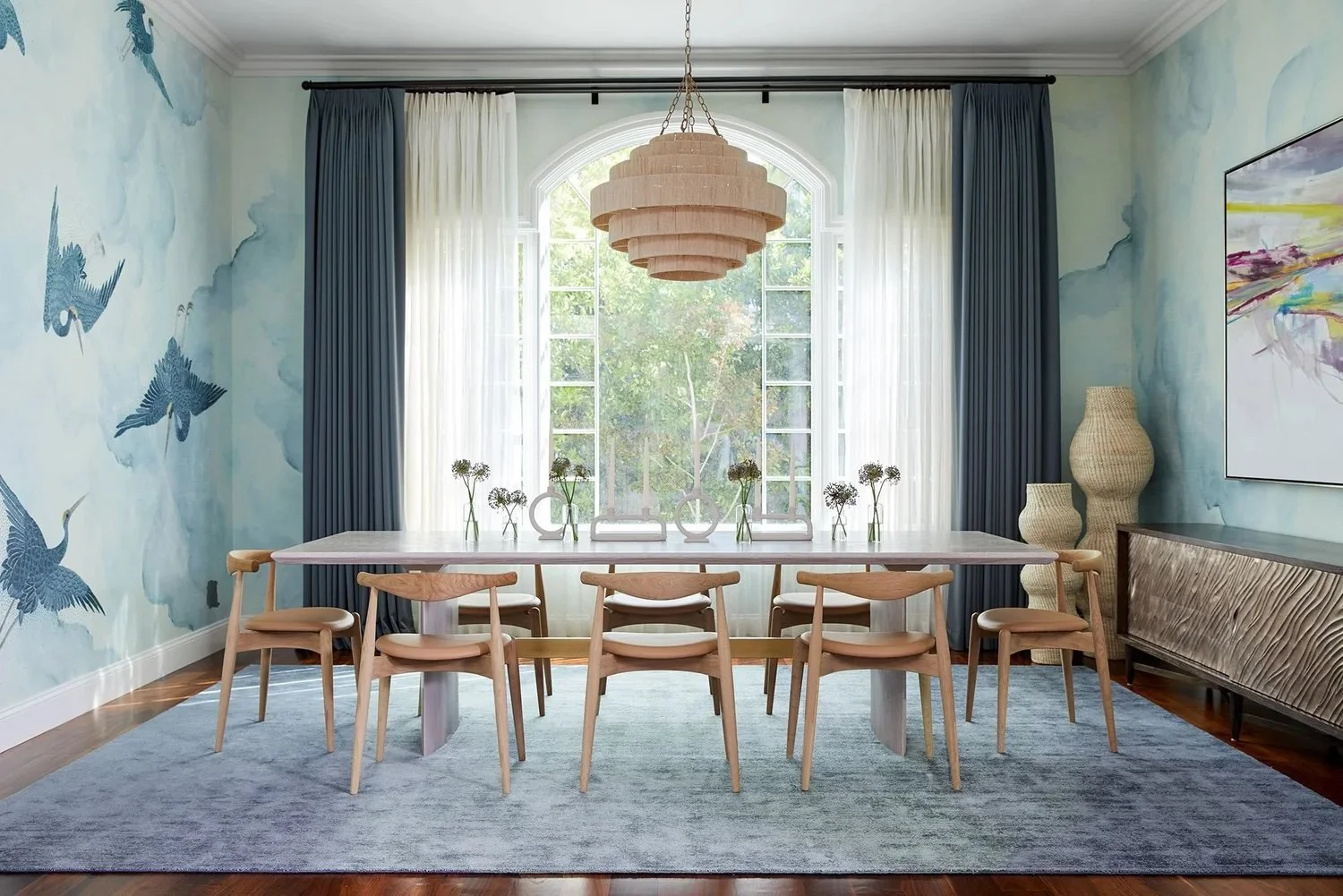
Image: ACD, Photographer, John Merkl
BC: In a world of beige and greige, your interiors celebrate color with confidence. Where do you find inspiration for your palettes, and how do you help clients embrace color in their homes?
AC: A lot of my color confidence comes from fashion. Fashion and what you wear on the daily are communicating your mood. At events where you have time to put more thought into the outfit, it’s about what you’re trying to tell others before they ever approach you. I think fabrics, silhouette, and detailing translate into the home in the same way- it’s about communicating who you are, what kind of lifestyle you have, and what you value. I studied Textiles & Clothing before I ever touched interiors, and fashion taught me that color and pattern are not decoration; they are mood and identity.
I also constantly draw from travel, from my own family's heritage, from art, from the way light looks different in Paris or Park City vs. San Francisco. When it comes to clients, the trick is rarely to convince someone to love color; most people already do, to some level. It is more about helping them feel safe trying it. I will often start with something they can live with happily for a long time, like a beautifully saturated piece of furniture or a graphic wallpaper in a powder room, somewhere lower stakes, and let them feel how much joy it brings before we go bigger. Once people experience a home that feels alive with color, it makes it hard to go back to beige.
BC: Collaboration is essential to creating exceptional spaces. How do you work with architects, builders, and artisans to bring a common vision to life?
AC: The best projects happen when everyone at the table respects what the others bring, there is a good flow of communication, and there is a workable timeline. I see my role as the person who holds the home's full emotional and aesthetic vision. Architects are solving a million issues with the structure and creating the home's bones. Builders are solving execution, balancing quality and budget, and artisans are bringing the one-of-a-kind details that make a space feel personalized rather than purchased. I try to bring people in early and keep the conversation honest, because the worst outcomes happen when collaborators are siloed. With craftspeople especially, I love getting into their world to understand how a piece is actually made. I have fun working out problems in the big picture, and in the smallest detail. A project is never the work of one person, no matter whose name is on the door, and I believe clients can feel that collaborative energy in the finished space.
BC: You’ve said that the client is your muse. What do you mean by that, and how do you translate a client’s personality and story into a uniquely personal interior?
AC: When I say the client is my muse, I mean they are the source material behind everything we create, from the very first mood board to the final installed room. Before anything, I am really listening to how a family actually lives, what they collect, what they are embarrassed to admit they love, what their childhood home felt like, and what they are hoping this next chapter of their life will look like. My job is to take all of that and translate it into rooms, spaces, lines, color, and material choices that feel inevitable once they are finished, like of course this is what their home should look like, even though no one could have predicted it at the start. I am not interested in imposing a signature look onto every client. I am interested in pulling out what is already true about them and giving it a beautiful, livable shape.
BC: When you’re not designing, how do you like to spend your time?
AC: Most of my non-design hours go to my husband and our two kids, who keep me very honest about what actually matters in a home- mostly snacks within reach and a couch that can survive a small child's worst day. Outside of that, I have a slightly intensive pickleball habit that my husband would describe as "not slight at all," and I will go to embarrassing lengths to defend my Heated Rivalry addiction (which I will not apologize for). I love to catch up with friends, I love a good meal out, but I am happiest with unexpected canceled plans. It’s like I just won some secret bonus time. When I get a day to myself in a different city, you will usually find me digging through a vintage shop or wandering through a museum, ideally with my phone on silent and absolutely no decisions to make except where my next meal will be!
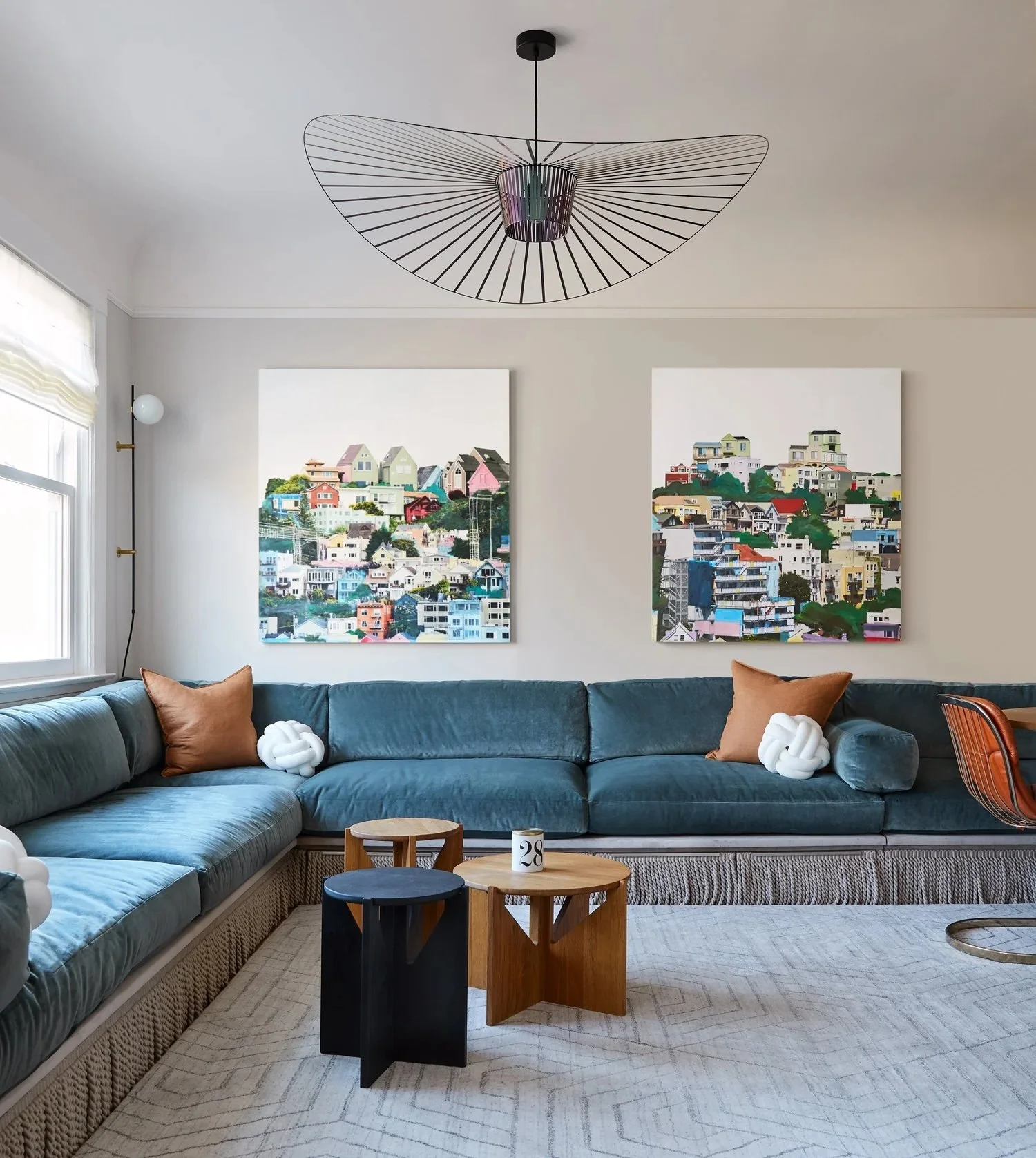
Image: Alicia’s kid proof sectional complete with hidden drawers for toys and snacks; Photographer, John Merkl