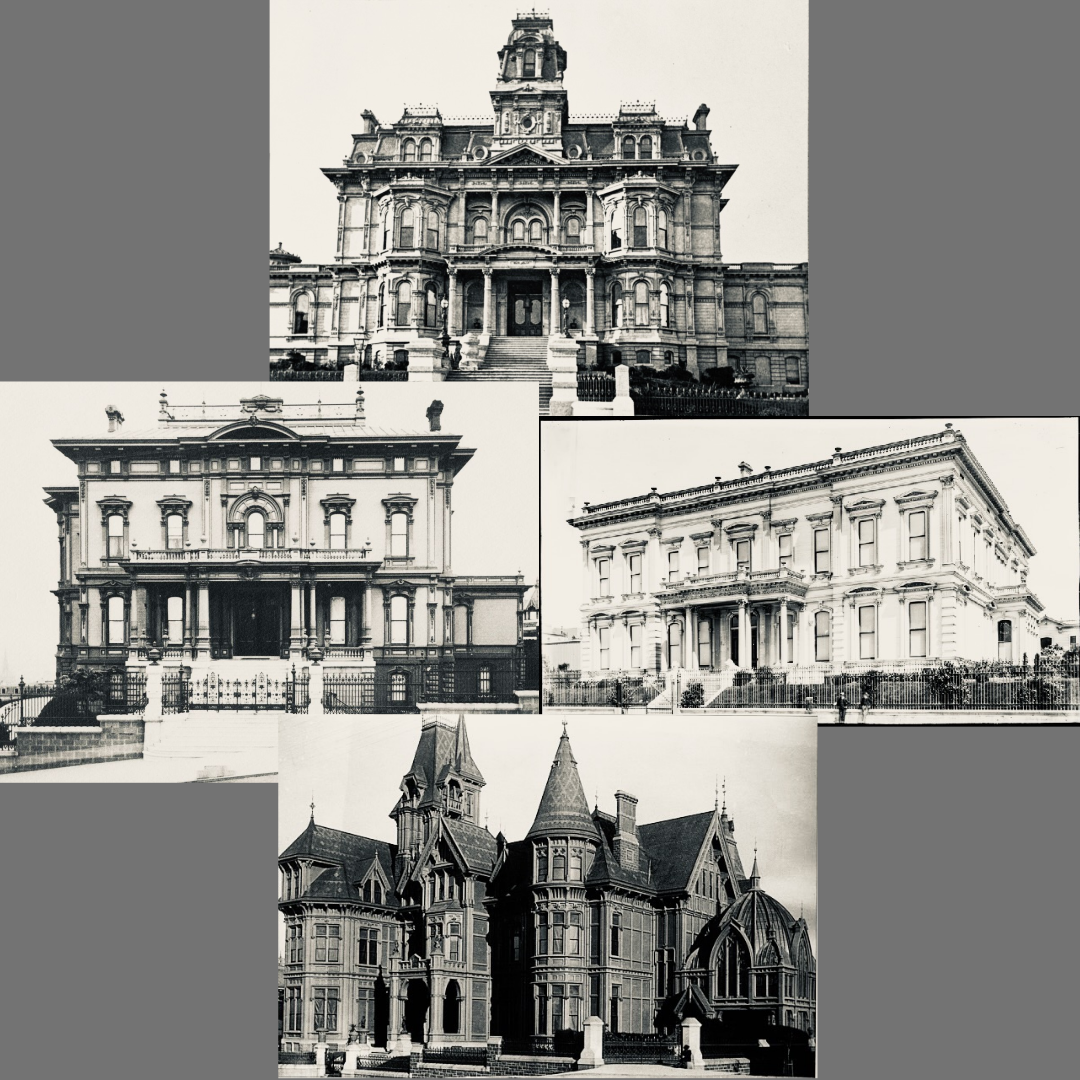
Images: Clockwise; Charles Crocker Mansion, Collis Huntington Mansion, Mark Hopkins Mansion, Leland Stanford Mansion
Boutell Consulting eagerly waited for Season 4 of Julian Fellowes' brilliant The Gilded Age. San Francisco had its own Gilded Age, complete with ruthless railroad tycoons comparable to George Russell. Known as the Big Four, Leland Stanford, Collis Huntington, Mark Hopkins, and Charles Crocker built the western portion of the Transcontinental Railroad, helping transform San Francisco into a city of extraordinary wealth and ambition.
Fueled by the 1849 California Gold Rush, the Comstock Lode silver boom, and powerful railroad monopolies, the city's fortunes rose dramatically. By the 1870s, these newly wealthy industrialists—often called robber barons—were building extravagant 50-room mansions on Nob Hill. Their grand "palaces" were more than homes; they were statements of power and ambition, designed to establish their owners as San Francisco's new aristocracy.
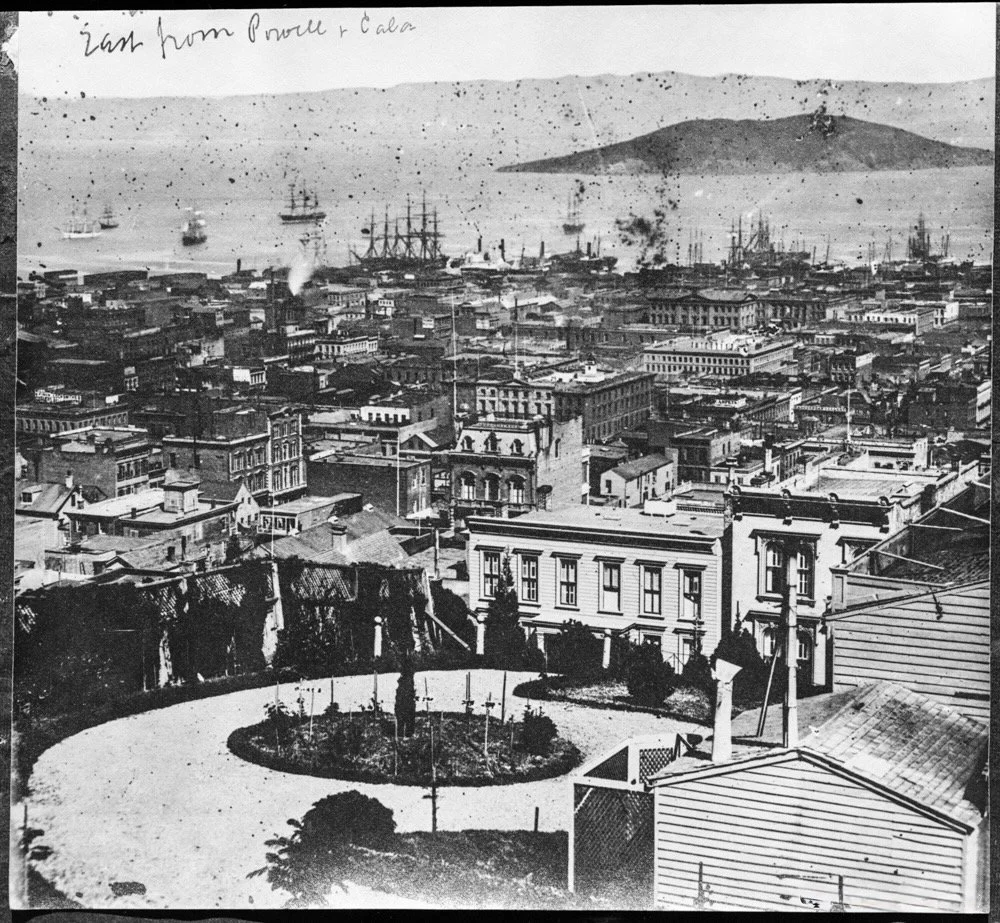
Image: Intersection of California and Powell Streets on Nob Hill, looking toward the Financial District, Portsmouth Square, and the Bay; Photographer, Lawrence & Houseworth; c. 1870
San Francisco was transforming from a wild frontier boomtown into the financial, industrial, and cultural capital of the American West. In 1873, Andrew Smith Hallidie invented the cable car, making it possible for the city’s wealthiest railroad tycoons to build their grand homes atop what was then known as California Hill. They were drawn to its panoramic views of the bay and its elevated position above the commerce, clamor, and rough-and-tumble streets below.
The area became known as "Nob Hill," a name derived from "nabob," an Anglo-Indian term for conspicuously wealthy men. Robert Louis Stevenson called it the "Hill of Palaces" where the city's elite built their castles in the sky. It was a world apart from the bohemian, working-class character of much of the rest of San Francisco.
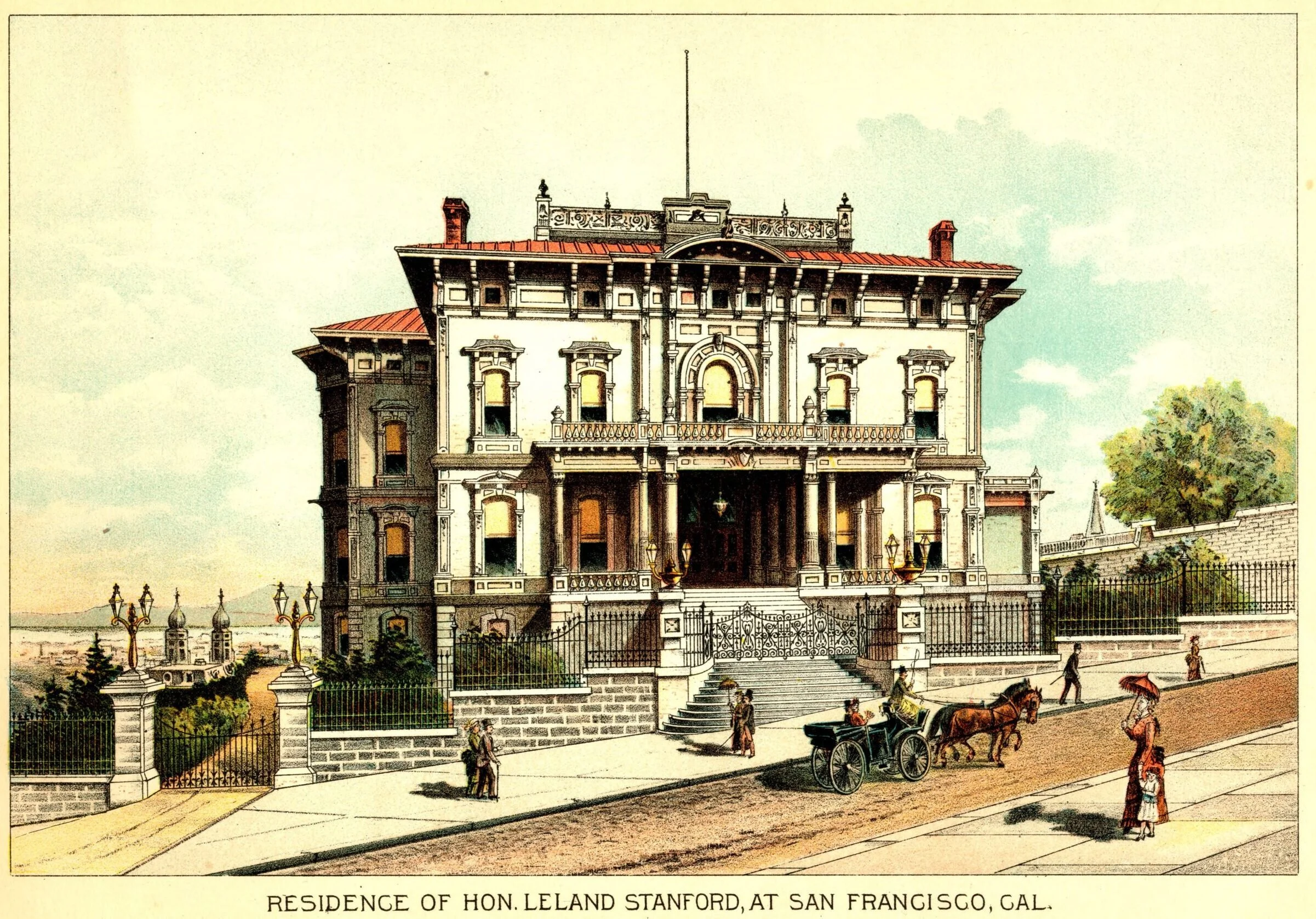
Image: Early drawing of Leland Stanford Mansion
Like their counterparts on the East Coast, the Nob Hill palaces featured music rooms, libraries, art galleries, and grand spaces for lavish receptions, fêtes, and balls. Leland Stanford’s mansion was the first to rise on the hill. As the San Francisco Chronicle reported on February 7, 1875:
“Leland Stanford is about to erect a large and handsome mansion on the east half of the vacant block bounded by California, Pine, Powell, and Mason streets. The plans are already prepared by the well-known architects, Messrs. Bugbee & Sons, and a hundred workmen have been for some time preparing the ground for the foundations.”
Designed by Bugbee & Sons, the 41,000-square-foot Italianate mansion was the largest private residence in California at the time.
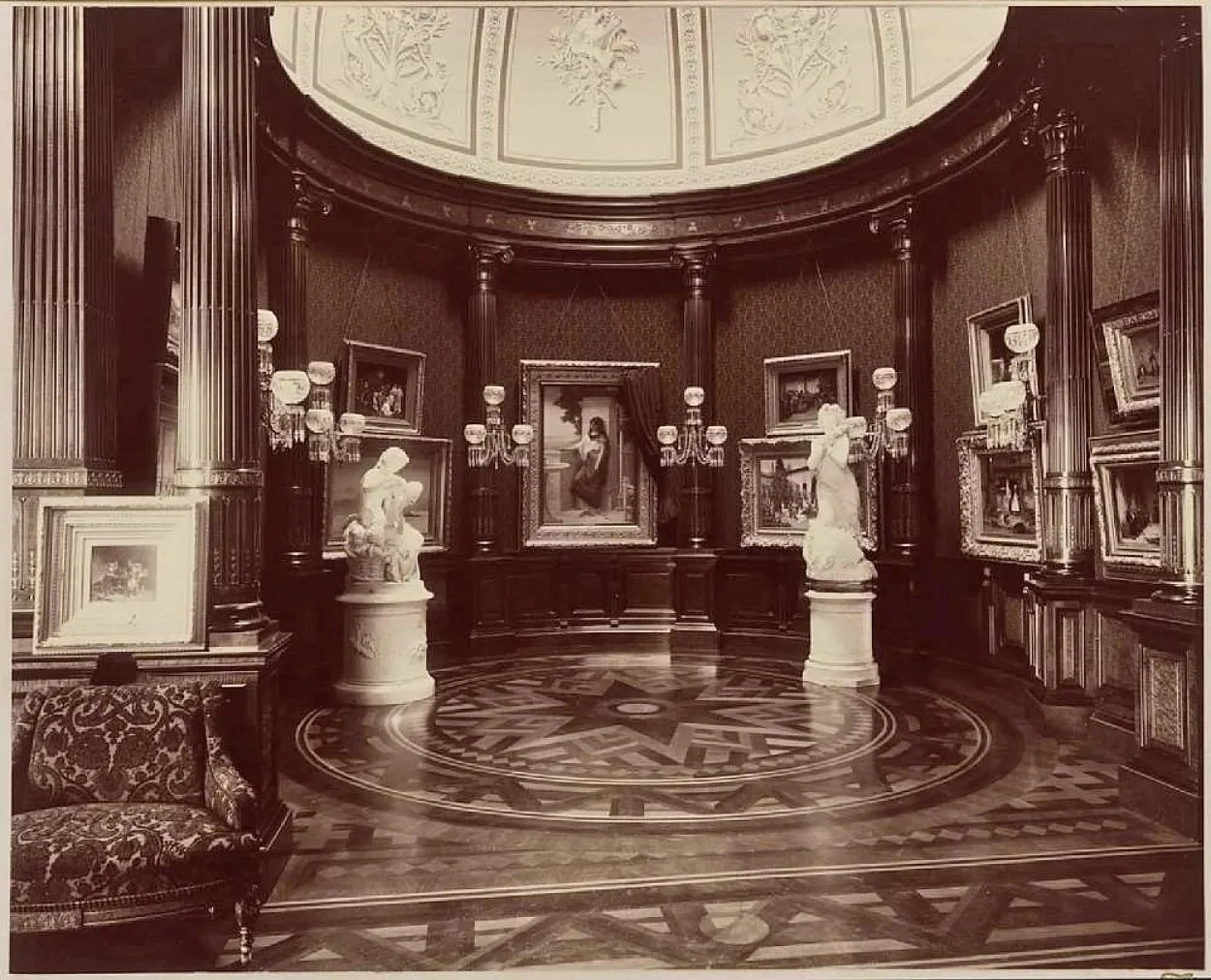
Image: Charles Crocker’s Nob Hill mansion art gallery; Photographer, Isaiah Taber; before 1906
Charles Crocker's villa was the last of the Big Four palaces to be built. He commissioned Bugbee & Sons to design the opulent Second Empire-style estate. The San Francisco Chronicle described it as "a princely mansion abounding with touches of original talent in its ornamentation, set in a fair and lovely garden that refreshes the eye and cheers the spirit with its expanses of verdure and its wealth of flowers."
The front façade featured a 76-foot tower crowned with a mansard roof and a wrought-iron widow's walk. From this lofty vantage point, perched at the pinnacle of Nob Hill, Crocker could look down upon the city—and, quite literally, the lower classes.
Crocker and Stanford's mansions, along with Mark Hopkins's Victorian Gothic estate and Collis Huntington's Beaux-Arts palace, were all lost in the 1906 earthquake and fire. Today, Grace Cathedral, the Stanford Court Hotel, the Mark Hopkins Hotel, and Huntington Park occupy their former sites, reminding us of San Francisco's magnificent Gilded Age.