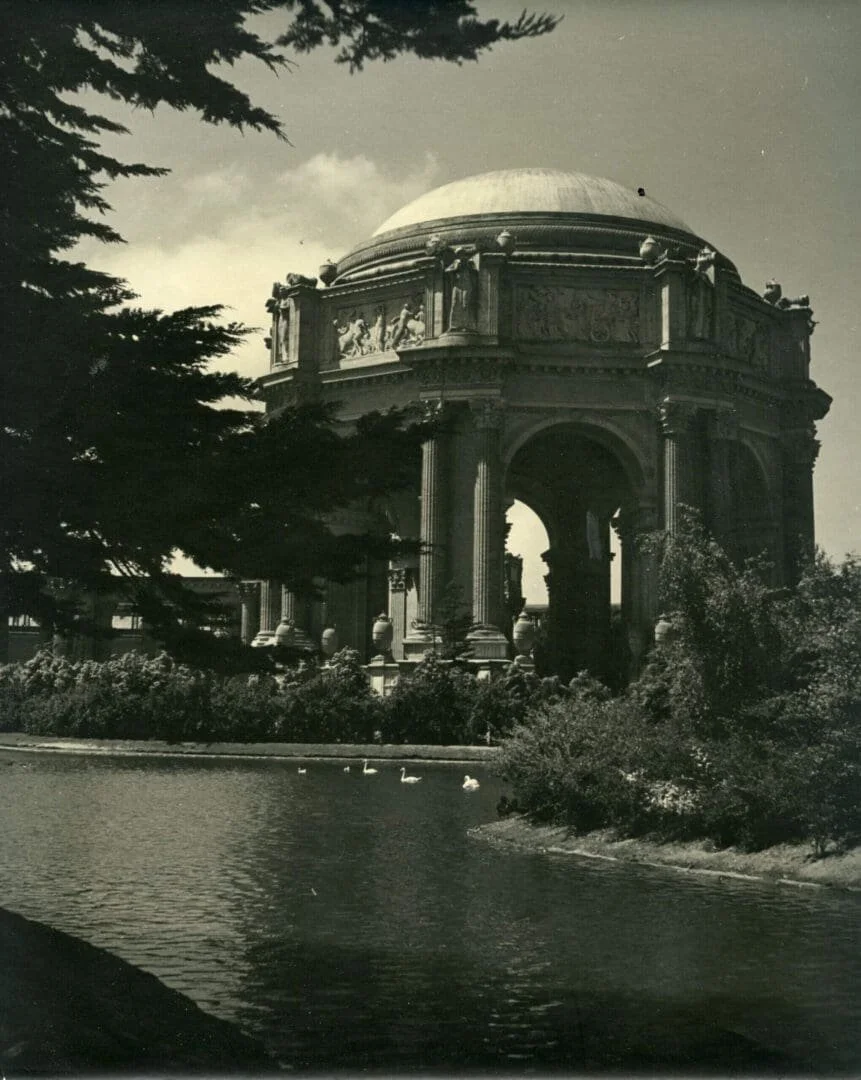
Image: Palace of Fine Arts, San Francisco; Architect, Bernard Maybeck; Photographer, Julius Shulman, 1947
The mortality of grandeur and the vanity of human wishes. - Bernard Maybeck
With Halloween around the corner, we think of its ancient origins as a time when the boundary between this world and the otherworld grew thin—when spirits could cross over, and the living might glimpse what lay beyond. San Francisco’s landmark Palace of Fine Arts has its own connection to another realm.
Designed by architect Bernard Maybeck for the 1915 Panama-Pacific International Exposition, the Palace features a soaring colonnade, domed rotunda, lagoon, and cypress trees that create an atmosphere that feels both ethereal and ephemeral. Maybeck conceived it not as a permanent building, but as an imagined Roman ruin: a classical monument partially reclaimed by nature. Among his inspirations was Swiss Symbolist painter Arnold Böcklin’s Isle of the Dead, one of the most haunting images of the late 19th century. Böcklin’s painting depicts a solitary, cypress-shrouded island approached by a small boat—a liminal place suspended between the known world and the unknown.
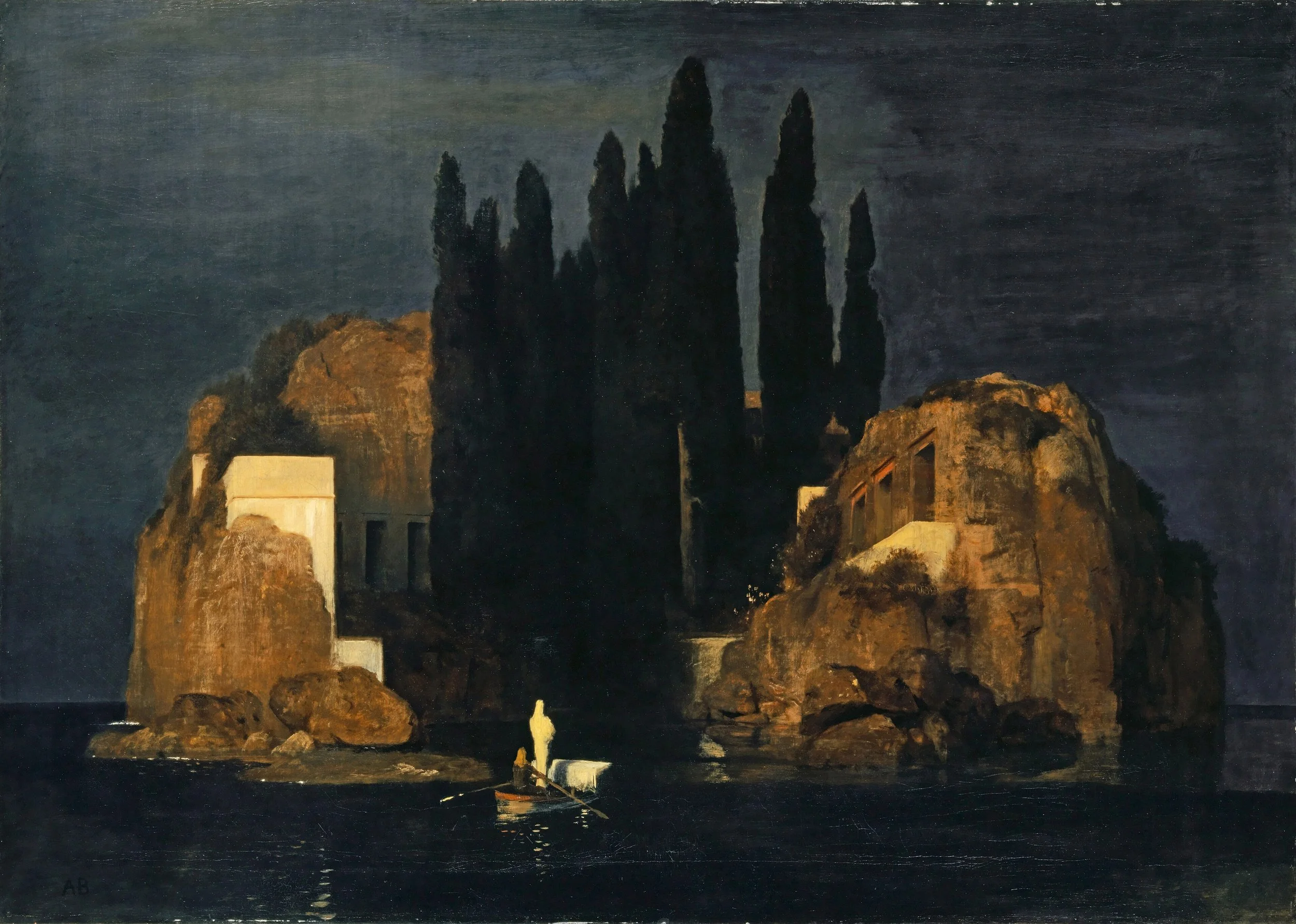
Image: Isle of the Dead (first version, May 1880); Artist, Arnold Böcklin
At the Palace, that same sense of mystery takes architectural form: a dreamlike landscape of ruins, water, trees, and shadow, created for an exposition yet seemingly belonging to another time—or perhaps another world.
Today, the restored Palace of Fine Arts is a favorite setting for weddings and events, but Maybeck conceived it as a place for contemplation. San Francisco was still recovering from the devastation of the 1906 earthquake, while Europe was moving toward the catastrophe of World War I. Much of the Panama-Pacific International Exposition celebrated trade, technology, and commerce; the Palace offered something altogether different—a meditation on beauty, mortality, and the passage of time.
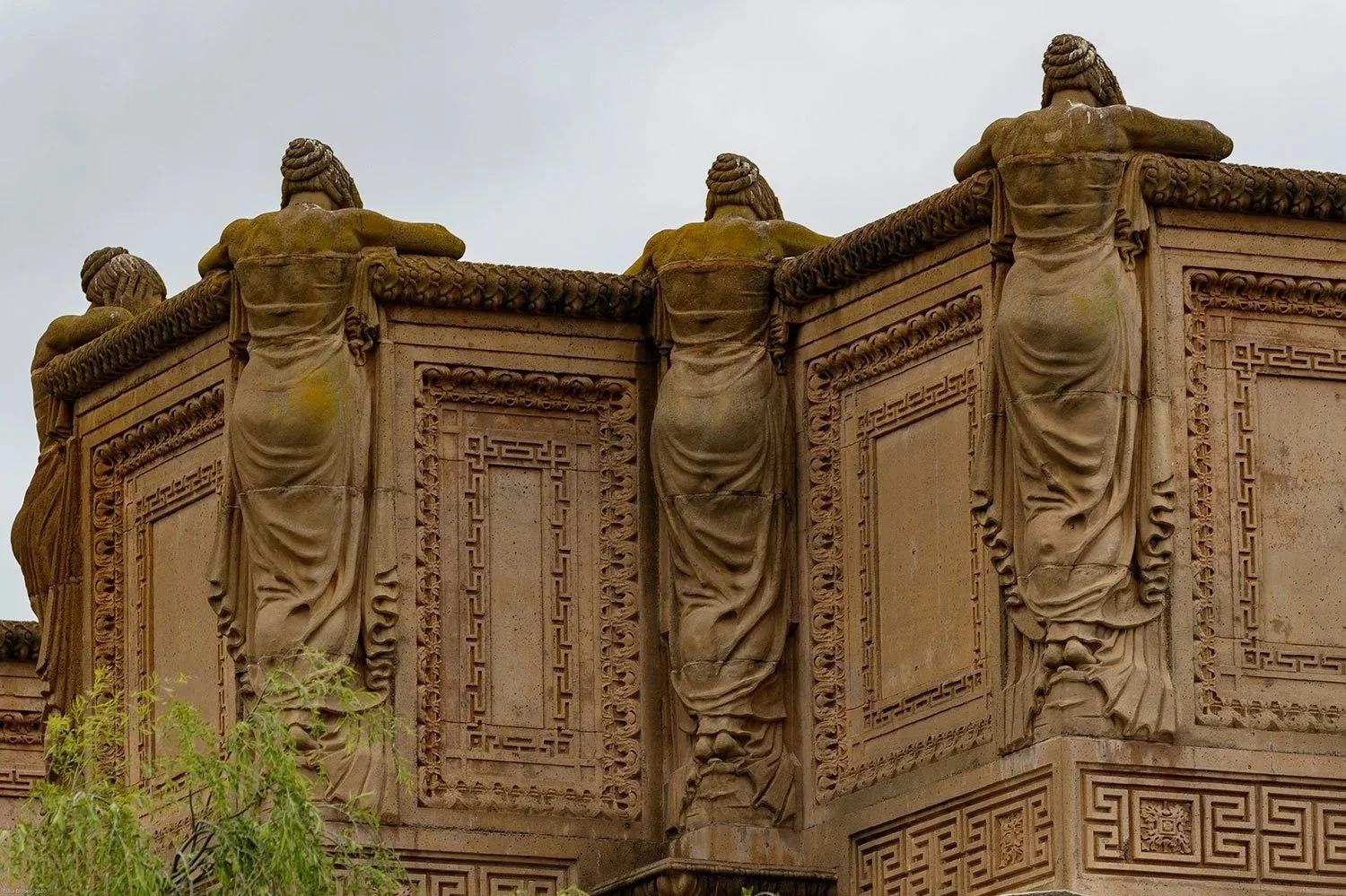
Image: Detail, Palace of Fine Arts, San Francisco; Architect, Bernard Maybeck; Photographer, Lisa Erdberg
Even its mournful “weeping ladies” carry a darker story. Their inspiration traces back to Hungarian artist István Csók’s depiction of the notorious noblewoman Elizabeth Báthory, in a scene portraying her pouring freezing water over her naked servants. The unsettling reference adds another layer to Maybeck’s dreamlike ruin: beautiful, theatrical, and faintly macabre.